BMI vs. Body Fat Percentage: The Basics to Know for Weight Management

BMIと体脂肪率の違いとは?体型管理で知っておきたい基本をわかりやすく解説

1. Are BMI and Body Fat Percentage the Same?

When looking into weight or body-shape management, two numbers often come up:

BMI

body fat percentage

They are often used in similar contexts, but they measure different things.

BMI is a value calculated from the relationship between height and weight.

Body fat percentage, on the other hand, is the proportion of your body weight made up of fat.

In simple terms:

BMI = an index based on height and weight

Body fat percentage = the proportion of body weight that is fat

Neither number can describe your entire physical condition on its own.


2. What Is BMI?

BMI stands for Body Mass Index.

It is calculated as:

BMI = weight (kg) ÷ height (m) ÷ height (m)

For example, if someone is 160 cm tall and weighs 55 kg, the calculation is:

55 ÷ 1.6 ÷ 1.6

Because BMI is easy to calculate from height and weight alone, it is widely used as one reference point when discussing body size and health.

However, BMI does not distinguish in detail between:

  • muscle mass
  • body fat mass
  • where fat is distributed
  • individual differences in body build

It is best viewed as one general indicator, not a complete assessment.


3. What Is Body Fat Percentage?

Body fat percentage represents the percentage of total body weight made up of body fat.

For example, someone who weighs 60 kg with a body fat percentage of 20% would have roughly 12 kg of body fat by simple calculation.

Home body-composition scales do not directly measure all body fat.

Many estimate body composition by passing a very small electrical current through the body and using that measurement to calculate values such as body fat percentage.

As a result, readings can vary depending on factors such as:

hydration status

whether you have recently eaten

exercise

bathing

time of measurement

Rather than relying on a single reading, it is more useful to compare measurements taken under similar conditions over time.


4. The Same BMI Can Look Very Different

Two people with the same height and weight will have the same BMI.

But their appearance and body composition may still be different.

For example, one person may exercise regularly and have more muscle mass, while another may exercise less and have a higher proportion of body fat.

If their height and weight are the same, their BMI will also be the same.

Yet their body fat percentage and muscle mass may differ.

That is why it is important not to label someone as “overweight” or “thin” based on BMI alone.

When thinking about body management, consider lifestyle habits and overall condition as well as numerical indicators.


5. Does Body Fat Percentage Change From Day to Day?

Home body-composition scales may show that body fat percentage is up 2% one day and down the next.

Short-term changes like these do not necessarily reflect an actual change in body fat mass.

Hydration and other conditions can affect the estimated reading.

For example, values may differ between:

morning and evening

before and after meals

before and after exercise

If you want to track change, try measuring at roughly the same time and under similar conditions.

It is usually more useful to look at trends over time than to react to every small daily fluctuation.


6. You Do Not Have to Focus on Weight Alone

Once you start managing your body shape or weight, it is easy to become fixated on the number on the scale.

But:

weight going down is not automatically “good”

weight going up is not automatically “bad”

Body weight can change due to:

  • hydration
  • food intake
  • bowel movements
  • time of measurement
  • muscle mass

You may also improve your activity or other habits without seeing a dramatic change on the scale.

Numbers can be useful information, but they do not need to become the goal itself.


7. Lifestyle Habits Worth Reviewing

When BMI or body fat percentage becomes a concern, you may start asking:

“What should I eat to lower it?”

“What ingredient should I take?”

But the foundation is still your everyday routine.

Start with:

food

movement

sleep

daily rhythm

Rather than drastically cutting food, build balanced meals with vegetables, protein sources, and staple foods.

For movement, begin with something sustainable such as walking, taking the stairs, or stretching.

If late nights have become common, review your sleep schedule too.

Body management is best approached through your overall lifestyle, not one number alone.


8. Do Not Become Too Attached to an “Ideal Number”

Online and on social media, you may see claims such as:

“This BMI is ideal.”

“Aim for this body fat percentage.”

But body build, muscle mass, age, sex, and other factors differ from person to person.

Not everyone needs to aim for the same number.

Trying to force a number lower through extreme restriction, skipped meals, or excessive exercise is not a healthy approach to body management.

Numbers are information that can help you review your habits—not a score that defines you.
Look at your body and routine over the longer term.


9. How Should You Think About Ingredients Such as Ellagic Acid?

When researching weight management, you may come across ingredients such as ellagic acid.

Ellagic acid is a type of polyphenol found in pomegranate and other plant foods, and it has been studied in nutrition and health research.

However, BMI and body fat percentage are not determined by one ingredient alone.

If you use health foods or supplements, also consider:

  • your overall diet
  • physical activity
  • sleep
  • suggested intake
  • product labeling

Learning about ingredients can be useful, but it is best used as a starting point for thinking about your broader lifestyle.


10. Keep Tracking Simple

If you want to monitor changes over time, keeping a simple record can help.

There is no need to track a long list of details every day.

For example, you might record only:

body weight

date of measurement

a short note

Notes such as “ate out yesterday,” “walked a lot today,” or “slept less than usual” can make it easier to understand numerical changes in context.

Choose a method that does not make tracking itself stressful.


11. Summary

BMI and body fat percentage are both commonly used in body management, but they mean different things.

BMI is an index calculated from height and weight.

Body fat percentage is the proportion of body weight made up of fat.

Both can provide useful information, but neither tells the whole story by itself.

When thinking about body management, also look at:

food

movement

sleep

daily rhythm

Rather than letting one number control the conversation, gradually build health habits you can continue comfortably.

ELVITA JOURNAL will continue to share clear, practical information about everyday body management and wellness.

Important Note

※This article provides general information about health, nutrition, and lifestyle habits. It does not guarantee weight loss, body-fat reduction, or other effects from any specific product or ingredient.
※If you have health concerns related to your weight or body composition, consider speaking with a physician, registered dietitian, or another qualified professional.

0 comments

Leave a comment

体型管理

BMI vs. Body Fat Percentage: The Basics to Know for Weight Management

ELVITA 編集部Kevin12 min read
BMIと体脂肪率の違いとは?体型管理で知っておきたい基本をわかりやすく解説

BMI and body fat percentage are both commonly used in weight management, but they measure different things. Learn what each number represents, why readings can fluctuate, and how to interpret them alongside everyday lifestyle habits.

1. Are BMI and Body Fat Percentage the Same?

When looking into weight or body-shape management, two numbers often come up:

BMI

body fat percentage

They are often used in similar contexts, but they measure different things.

BMI is a value calculated from the relationship between height and weight.

Body fat percentage, on the other hand, is the proportion of your body weight made up of fat.

In simple terms:

BMI = an index based on height and weight

Body fat percentage = the proportion of body weight that is fat

Neither number can describe your entire physical condition on its own.


2. What Is BMI?

BMI stands for Body Mass Index.

It is calculated as:

BMI = weight (kg) ÷ height (m) ÷ height (m)

For example, if someone is 160 cm tall and weighs 55 kg, the calculation is:

55 ÷ 1.6 ÷ 1.6

Because BMI is easy to calculate from height and weight alone, it is widely used as one reference point when discussing body size and health.

However, BMI does not distinguish in detail between:

  • muscle mass
  • body fat mass
  • where fat is distributed
  • individual differences in body build

It is best viewed as one general indicator, not a complete assessment.


3. What Is Body Fat Percentage?

Body fat percentage represents the percentage of total body weight made up of body fat.

For example, someone who weighs 60 kg with a body fat percentage of 20% would have roughly 12 kg of body fat by simple calculation.

Home body-composition scales do not directly measure all body fat.

Many estimate body composition by passing a very small electrical current through the body and using that measurement to calculate values such as body fat percentage.

As a result, readings can vary depending on factors such as:

hydration status

whether you have recently eaten

exercise

bathing

time of measurement

Rather than relying on a single reading, it is more useful to compare measurements taken under similar conditions over time.


4. The Same BMI Can Look Very Different

Two people with the same height and weight will have the same BMI.

But their appearance and body composition may still be different.

For example, one person may exercise regularly and have more muscle mass, while another may exercise less and have a higher proportion of body fat.

If their height and weight are the same, their BMI will also be the same.

Yet their body fat percentage and muscle mass may differ.

That is why it is important not to label someone as “overweight” or “thin” based on BMI alone.

When thinking about body management, consider lifestyle habits and overall condition as well as numerical indicators.


5. Does Body Fat Percentage Change From Day to Day?

Home body-composition scales may show that body fat percentage is up 2% one day and down the next.

Short-term changes like these do not necessarily reflect an actual change in body fat mass.

Hydration and other conditions can affect the estimated reading.

For example, values may differ between:

morning and evening

before and after meals

before and after exercise

If you want to track change, try measuring at roughly the same time and under similar conditions.

It is usually more useful to look at trends over time than to react to every small daily fluctuation.


6. You Do Not Have to Focus on Weight Alone

Once you start managing your body shape or weight, it is easy to become fixated on the number on the scale.

But:

weight going down is not automatically “good”

weight going up is not automatically “bad”

Body weight can change due to:

  • hydration
  • food intake
  • bowel movements
  • time of measurement
  • muscle mass

You may also improve your activity or other habits without seeing a dramatic change on the scale.

Numbers can be useful information, but they do not need to become the goal itself.


7. Lifestyle Habits Worth Reviewing

When BMI or body fat percentage becomes a concern, you may start asking:

“What should I eat to lower it?”

“What ingredient should I take?”

But the foundation is still your everyday routine.

Start with:

food

movement

sleep

daily rhythm

Rather than drastically cutting food, build balanced meals with vegetables, protein sources, and staple foods.

For movement, begin with something sustainable such as walking, taking the stairs, or stretching.

If late nights have become common, review your sleep schedule too.

Body management is best approached through your overall lifestyle, not one number alone.


8. Do Not Become Too Attached to an “Ideal Number”

Online and on social media, you may see claims such as:

“This BMI is ideal.”

“Aim for this body fat percentage.”

But body build, muscle mass, age, sex, and other factors differ from person to person.

Not everyone needs to aim for the same number.

Trying to force a number lower through extreme restriction, skipped meals, or excessive exercise is not a healthy approach to body management.

Numbers are information that can help you review your habits—not a score that defines you.
Look at your body and routine over the longer term.


9. How Should You Think About Ingredients Such as Ellagic Acid?

When researching weight management, you may come across ingredients such as ellagic acid.

Ellagic acid is a type of polyphenol found in pomegranate and other plant foods, and it has been studied in nutrition and health research.

However, BMI and body fat percentage are not determined by one ingredient alone.

If you use health foods or supplements, also consider:

  • your overall diet
  • physical activity
  • sleep
  • suggested intake
  • product labeling

Learning about ingredients can be useful, but it is best used as a starting point for thinking about your broader lifestyle.


10. Keep Tracking Simple

If you want to monitor changes over time, keeping a simple record can help.

There is no need to track a long list of details every day.

For example, you might record only:

body weight

date of measurement

a short note

Notes such as “ate out yesterday,” “walked a lot today,” or “slept less than usual” can make it easier to understand numerical changes in context.

Choose a method that does not make tracking itself stressful.


11. Summary

BMI and body fat percentage are both commonly used in body management, but they mean different things.

BMI is an index calculated from height and weight.

Body fat percentage is the proportion of body weight made up of fat.

Both can provide useful information, but neither tells the whole story by itself.

When thinking about body management, also look at:

food

movement

sleep

daily rhythm

Rather than letting one number control the conversation, gradually build health habits you can continue comfortably.

ELVITA JOURNAL will continue to share clear, practical information about everyday body management and wellness.

Important Note

※This article provides general information about health, nutrition, and lifestyle habits. It does not guarantee weight loss, body-fat reduction, or other effects from any specific product or ingredient.
※If you have health concerns related to your weight or body composition, consider speaking with a physician, registered dietitian, or another qualified professional.

※This article is provided for general health and nutrition information only and does not guarantee the effects or benefits of any specific product.

※It is not intended to diagnose, treat, or prevent disease.

Related ELVITA Products

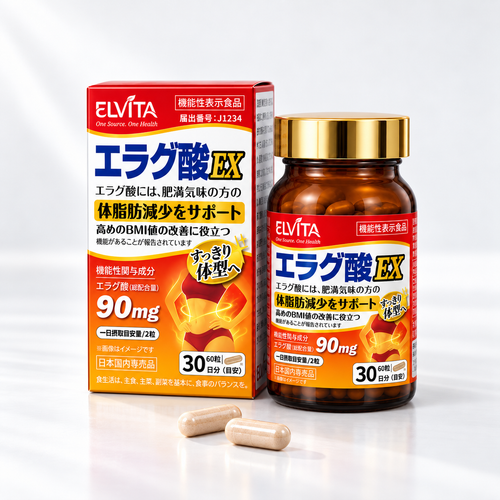
Ellagic Acid EX 60 Capsules

Ellagic Acid EX 60 Capsules

Ellagic Acid EX | For Those Mindful of Body Fat A Foods with Function Claims product formulated with ellagic acid. Research has reported that ellagic acid supports body fat redu...
View Product