What Is GABA? A Simple Guide to This Everyday Wellness Nutrient

GABAとは?毎日のコンディションを考えるうえで注目される成分をわかりやすく解説

1. What Is GABA?

GABA stands for gamma-aminobutyric acid, a naturally occurring amino-acid-related compound in the human body.

Unlike amino acids used to build proteins, GABA is best known for its role in the nervous system.

It has been studied for decades in neuroscience, and in recent years it has also become more familiar in the food and wellness market.

As modern life becomes busier and more connected, more people are paying attention to rest, sleep, and daily balance—one reason GABA has gained wider interest.

However, taking GABA does not mean that a specific change will happen immediately.

GABA naturally present in the body and GABA consumed through foods or supplements should not be assumed to work in exactly the same way.


2. What Does GABA Do in the Body?

The nervous system constantly sends information between nerve cells.

GABA is one of the compounds involved in this communication.

It is widely recognized as a major inhibitory neurotransmitter in the central nervous system and plays a role in balancing neural activity.

At the same time, dietary GABA and the GABA naturally present in the nervous system are not necessarily equivalent in how they act.

Researchers are still studying how orally consumed GABA may function in the body.

So rather than thinking:

“If I take GABA, I will definitely sleep better.”

“GABA will remove stress.”

it is more accurate to view GABA as a compound being researched in relation to rest, mood, and daily condition.


3. Why Has GABA Become Popular?

Work, family responsibilities, social demands, and constant digital information can all affect our daily rhythm.

Habits such as:

  • using a phone late at night
  • going to bed at very different times
  • irregular meals
  • not getting enough rest

can make it harder to maintain a consistent routine.

As interest in sleep and recovery has grown, so has interest in ingredients such as GABA.

Studies have explored GABA in relation to rest and psychological condition, but study design, dosage, and participant groups vary.

Individual findings should therefore be interpreted carefully and in the context of the broader evidence.


4. Which Foods Contain GABA?

GABA is not limited to supplements. It also occurs naturally in a variety of foods.

Examples include:

  • germinated brown rice
  • tomatoes
  • eggplant
  • potatoes
  • pumpkin
  • fermented foods

The amount can vary depending on variety, processing, and fermentation conditions.

Rather than chasing foods simply because they contain GABA, it is more useful to build a balanced diet with vegetables, grains, and quality protein sources.

Everyday wellness is never determined by one ingredient alone.


5. What Matters More for Sleep and Daily Balance?

Many people interested in GABA are also thinking about sleep and rest.

But before focusing on any single ingredient, it is worth reviewing your daily routine.

For example:

Keep your wake-up time reasonably consistent.

Reduce bright light and screen time before bed.

Stay physically active during the day.

Review caffeine intake later in the day.

Make space for genuine downtime.

You do not have to change everything at once.

Small habits that you can maintain are more realistic.

Rest is an important part of a healthy lifestyle.
The busier life gets, the more valuable it can be to protect your daily rhythm.


6. What to Look for in a GABA Product

When choosing a food or supplement containing GABA, look beyond the words “contains GABA” and consider the formula as a whole.

Useful points to check include:

  • recommended daily intake
  • amount of GABA in the formula
  • other ingredients
  • raw materials
  • manufacturing environment
  • quality control
  • how easy it is to use consistently

More is not automatically better.

Follow the recommended serving and consider how the product fits alongside your diet and lifestyle.


7. Summary

GABA naturally occurs in the human body and plays an important role in nervous-system signaling.

It is also being studied in relation to rest, sleep, and everyday condition, which has increased interest in the food and wellness market.

At the same time, research on orally consumed GABA is still developing, so claims should not go beyond the available evidence.

The foundation of everyday wellness remains:

nutrition, sleep, movement, and rest.

Learning about GABA can be a useful opportunity to review your own routine and recovery habits.

ELVITA JOURNAL will continue to share practical, easy-to-understand information on nutrients and everyday wellness.


Important Note

※This article is provided for general health and nutrition information only and does not guarantee the effects or benefits of any specific product or ingredient.
※It is not intended to diagnose, treat, or prevent disease.
0 comments

Leave a comment

成分ガイド

What Is GABA? A Simple Guide to This Everyday Wellness Nutrient

ELVITA 編集部Kevin8 min read
GABAとは?毎日のコンディションを考えるうえで注目される成分をわかりやすく解説

What is GABA? Learn about its role in the body, why it has attracted attention, where it occurs in food, and the everyday sleep and lifestyle habits that support daily balance.

1. What Is GABA?

GABA stands for gamma-aminobutyric acid, a naturally occurring amino-acid-related compound in the human body.

Unlike amino acids used to build proteins, GABA is best known for its role in the nervous system.

It has been studied for decades in neuroscience, and in recent years it has also become more familiar in the food and wellness market.

As modern life becomes busier and more connected, more people are paying attention to rest, sleep, and daily balance—one reason GABA has gained wider interest.

However, taking GABA does not mean that a specific change will happen immediately.

GABA naturally present in the body and GABA consumed through foods or supplements should not be assumed to work in exactly the same way.


2. What Does GABA Do in the Body?

The nervous system constantly sends information between nerve cells.

GABA is one of the compounds involved in this communication.

It is widely recognized as a major inhibitory neurotransmitter in the central nervous system and plays a role in balancing neural activity.

At the same time, dietary GABA and the GABA naturally present in the nervous system are not necessarily equivalent in how they act.

Researchers are still studying how orally consumed GABA may function in the body.

So rather than thinking:

“If I take GABA, I will definitely sleep better.”

“GABA will remove stress.”

it is more accurate to view GABA as a compound being researched in relation to rest, mood, and daily condition.


3. Why Has GABA Become Popular?

Work, family responsibilities, social demands, and constant digital information can all affect our daily rhythm.

Habits such as:

  • using a phone late at night
  • going to bed at very different times
  • irregular meals
  • not getting enough rest

can make it harder to maintain a consistent routine.

As interest in sleep and recovery has grown, so has interest in ingredients such as GABA.

Studies have explored GABA in relation to rest and psychological condition, but study design, dosage, and participant groups vary.

Individual findings should therefore be interpreted carefully and in the context of the broader evidence.


4. Which Foods Contain GABA?

GABA is not limited to supplements. It also occurs naturally in a variety of foods.

Examples include:

  • germinated brown rice
  • tomatoes
  • eggplant
  • potatoes
  • pumpkin
  • fermented foods

The amount can vary depending on variety, processing, and fermentation conditions.

Rather than chasing foods simply because they contain GABA, it is more useful to build a balanced diet with vegetables, grains, and quality protein sources.

Everyday wellness is never determined by one ingredient alone.


5. What Matters More for Sleep and Daily Balance?

Many people interested in GABA are also thinking about sleep and rest.

But before focusing on any single ingredient, it is worth reviewing your daily routine.

For example:

Keep your wake-up time reasonably consistent.

Reduce bright light and screen time before bed.

Stay physically active during the day.

Review caffeine intake later in the day.

Make space for genuine downtime.

You do not have to change everything at once.

Small habits that you can maintain are more realistic.

Rest is an important part of a healthy lifestyle.
The busier life gets, the more valuable it can be to protect your daily rhythm.


6. What to Look for in a GABA Product

When choosing a food or supplement containing GABA, look beyond the words “contains GABA” and consider the formula as a whole.

Useful points to check include:

  • recommended daily intake
  • amount of GABA in the formula
  • other ingredients
  • raw materials
  • manufacturing environment
  • quality control
  • how easy it is to use consistently

More is not automatically better.

Follow the recommended serving and consider how the product fits alongside your diet and lifestyle.


7. Summary

GABA naturally occurs in the human body and plays an important role in nervous-system signaling.

It is also being studied in relation to rest, sleep, and everyday condition, which has increased interest in the food and wellness market.

At the same time, research on orally consumed GABA is still developing, so claims should not go beyond the available evidence.

The foundation of everyday wellness remains:

nutrition, sleep, movement, and rest.

Learning about GABA can be a useful opportunity to review your own routine and recovery habits.

ELVITA JOURNAL will continue to share practical, easy-to-understand information on nutrients and everyday wellness.


Important Note

※This article is provided for general health and nutrition information only and does not guarantee the effects or benefits of any specific product or ingredient.
※It is not intended to diagnose, treat, or prevent disease.

※This article is provided for general health and nutrition information only and does not guarantee the effects or benefits of any specific product.

※It is not intended to diagnose, treat, or prevent disease.

Related ELVITA Products

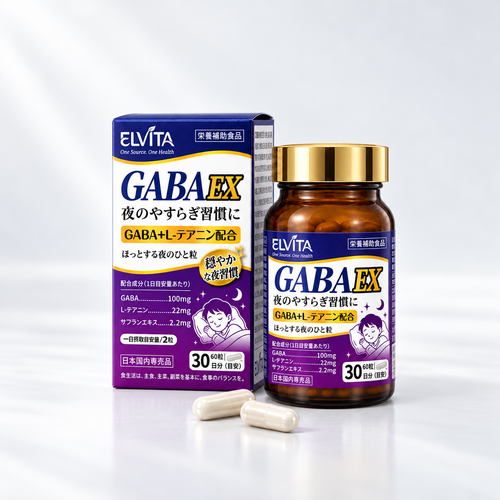
GABA EX 60 Capsules

GABA EX 60 Capsules

GABA EX | For Your Evening Wind-Down Routine A dietary supplement formulated with GABA, L-theanine, and saffron extract.Two capsules per day provide GABA 200 mg, L-theanine 100 ...
View Product