

1. What Is Ellagic Acid?
Ellagic acid is a naturally occurring polyphenol found in fruits and other plant foods.
It is especially associated with pomegranate, but it can also be found in foods such as:
- berries
- strawberries
- raspberries
- blackberries
- walnuts
Polyphenols are a large and diverse group of compounds produced by plants, and different polyphenols have different characteristics.
Ellagic acid is one of them and is being studied in nutrition, metabolism, and wellness research.
As interest in food, body composition, and weight management has grown, ellagic acid has also appeared more often in the supplement market.
That does not mean a single ingredient can change body composition on its own.
The best place to start is by understanding what ellagic acid actually is.
2. How Is Ellagic Acid Related to Polyphenols?
Plants produce many natural compounds as part of their response to UV exposure and other environmental conditions.
Polyphenols are one major group of these compounds.
In foods, ellagic acid may occur in free form or as part of related compounds such as ellagitannins.
After consumption, these compounds are affected by digestion, the gut environment, and other metabolic processes.
For that reason, it is better to look at food source, intake pattern, and metabolism rather than focusing only on a single number on a label.
Research on ellagic acid and its metabolites is still ongoing.
3. Which Foods Contain Ellagic Acid?
One of the best-known food sources is pomegranate.
Ellagic acid or related polyphenols can also be found in:
- strawberries
- raspberries
- blackberries
- cranberries
- walnuts
Actual amounts vary depending on the variety, origin, ripeness, and processing method.
Rather than eating large amounts of one food for a single compound, it is generally more practical to include a variety of fruits, vegetables, nuts, and other plant foods.
Instead of thinking:
“I need this food for this one ingredient.”
try thinking:
“I want more variety in the plant foods I eat.”
That approach is usually easier to maintain over time.
4. Why Is Ellagic Acid Getting Attention?
Plant polyphenols have long been studied in health and beauty research.
Ellagic acid has been investigated for its metabolism in the body and its relationship with oxidative processes.
As it has become more common in foods and supplements, researchers have also explored its possible relationship with body composition and weight-management outcomes.
However, this should not be interpreted as:
“Ellagic acid will make you lose weight.”
“You can reduce body fat without changing your diet.”
Scientific studies are carried out under specific conditions, with defined participant groups, dosages, and study periods.
Study findings therefore need to be separated from assumptions about what any individual food or supplement will do in everyday life.
It is more accurate to view ellagic acid as a plant-derived compound currently being studied in nutrition and wellness research.
5. The Foundation of Weight Management Is Daily Balance
When people think about weight management, it is easy to focus on one ingredient.
But the foundation is still your daily routine.
Four areas matter most:
nutrition
physical activity
sleep
daily routine
Eating well does not mean simply eating less. It means balancing vegetables, protein, carbohydrates, and fats in a way that works for you.
Daily movement matters too.
That does not require intense training. Small habits can help:
- walk a little more
- take the stairs
- stretch regularly
- break up long periods of sitting
Weight management is not about chasing a short-term result.
It is about building habits you can realistically maintain.
6. What Can You Focus on in Your Diet?
Weight management often makes people think about eating less, but getting the nutrients your body needs is just as important.
Useful basics include:
eating a variety of vegetables and fruit
getting enough protein
choosing fiber-rich foods
reviewing snacks and sugary drinks
If meal times vary dramatically from day to day, your overall routine can also become harder to maintain.
You do not need to be perfect every day.
A sustainable routine that fits your lifestyle is more valuable.
Learning about compounds such as ellagic acid can simply be one prompt to take a broader look at how you eat.
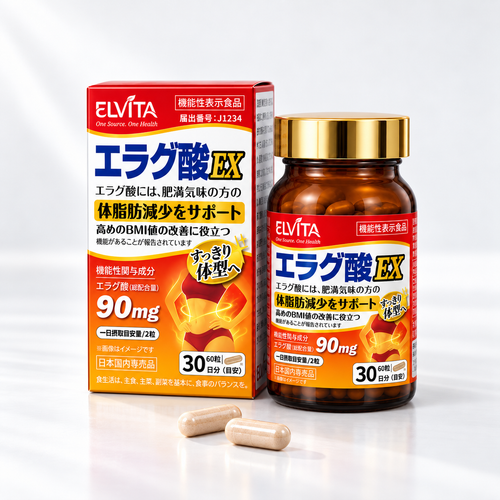
7. What to Look for in an Ellagic Acid Product
When choosing a supplement containing ellagic acid, do not look only at one number on the label.
Useful points to check include:
- ellagic acid content
- ingredient source
- recommended daily intake
- other ingredients in the formula
- manufacturing environment
- quality control
- how easy the product is to use consistently
More is not automatically better.
Follow the recommended intake and keep a balanced diet as the foundation.
8. Summary
Ellagic acid is a plant polyphenol found in pomegranate, berries, and other foods.
It is being studied across areas including nutrition, metabolism, and wellness.
At the same time, weight management is never determined by a single ingredient.
Balanced nutrition, regular activity, adequate sleep, and a sustainable routine remain the foundation.
Learning about ellagic acid can be a useful way to think more broadly about diet and lifestyle.
ELVITA JOURNAL will continue to share clear information on everyday health, beauty, and nutrition.
Important Note
※This article is provided for general health and nutrition information only and does not guarantee the effects or benefits of any specific product or ingredient.
※It is not intended to diagnose, treat, or prevent disease.



0 comments